Jun 6, 2013

Justice for Orphans

As the uncle of two adopted children and friend of many who have and have been adopted, I can say that adoption has changed my life for the better. I've seen the way that adoption has changed lives, and I'm grateful that families have the ability to adopt children who otherwise have no family. Because of what I have seen, it wasn't hard for me to believe that adoption is one of the best ways to keep children from growing up in orphanages. It wasn't until I read Orphan Justice that I realized that adoption wasn't the only way to enact social justice on the behalf of Orphans.

In each chapter, Johnny Carr brings you deeper in the world of orphans. Reading this book opened up my eyes to issues I never would have connected to orphans. In the first few chapters, Carr discusses what can make a child an orphan. One of the first major things that I learned was that not all children in orphanages are without parents. There are single parent orphans who grow up in orphanages because their parents are not able to provide for them. Knowing this, it becomes easier to see that adoption, while a very good option, is not the only way to keep children from beings orphans. There are often deeper issues at work that need to be addressed in order to lower the number of children in orphanages. Issues like human trafficking, HIV, and poverty can often lead to children being put into an orphanage. When we fight these problems, we can help children from becoming orphans. The second half of the book addresses foster care, racism, abortion, and church budgets. These chapters aren't about what creates orphans, but more about dealing with the issues more apparent in the United States. Carr addresses these from the perspective of how the church have a better impact in these areas.

In all areas of the book, Carr most important point is that "God made the family for children." Children should not have to grow up in orphanages, but instead should be able to grow up in a family, be it their own family or an adopted family. He believes that the church needs to make a stand and fight for children. What I really appreciate about this is how he argues for the church to make an impact. He believes that the church needs to have a presence in the communities where there are orphans. That way the church can do its most important work of spreading the gospel while helping to heal what is broken in the community. If we can fight things like poverty, aids, and human trafficking around the world and in our own communities  then we can help children return to their own families instead of having to grow up in an orphanage.

If you're like me, you probably thought adoption was the only way to help an orphan. After reading  Orphan Justice, my eyes have been opened to the problems that create orphans and how we can help children grow up in families. You should read this book. It's a eye opener and a practical book. It doesn't just sound the alarm, but every chapter ends with a section of what you can do. This book will open your eyes to what is going on in the world and how you can help children grow up in a family.

Disclosure of Material Connection: I received this book free from B&H Publishing Group through netgalley.com. I was not required to write a positive review. The opinions I have expressed are my own. I am disclosing this in accordance with the Federal Trade Commission’s 16 CFR, Part 255 : “Guides Concerning the Use of Endorsements and Testimonials in Advertising.”
May 22, 2013

Knowing when or when not to Quit

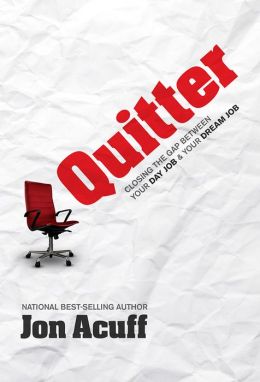
Don't let the title of the book fool you, Jon Acuff doesn't want you to quit your day job. Well, actually he does, just not right now. Writing from his own experience of repeatedly quitting, Acuff's book Quitter is an encouragement not to quit yet. We all have dreams of the jobs that we'd like to have and it seems like that pesky day job just gets in our way, so we think about quitting. As a writer and public speaker, Acuff gets it. He has toughed out (or at least tried to tough out) his fair share of jobs that he did not like. The problem is quitting often brings more problems than it solves. Quitting causes us to answer to all the bills and costs that were covered by that job that we didn't like. While quitting your current job to pursue your dream job may sound wonderful, it often makes it harder to pursue your dream. Instead, Jon Acuff shares his experience of finally learning to tough it out in a job that wasn't his dream in order to get to his dream. He offers advice on how to work your dream around your day job and how to look for ways for your current job to prepare you for your dream. Rather than dreading your job and wishing you could quit, you are instead laying the foundation for your dream job so that you can be ready for it when it becomes possible.

While listening (because I "read" the audio book) to this, I didn't think that it applied to me because I'm not working in a field that is so far off from my own. What I began to learn, however, if you're not in your dream job, you shouldn't just sit around and wait for it to happen. As a fairly recent graduate, I can tell you I had high hopes of graduating and then finding my dream job. Unfortunately,  that hasn't happened. Listening to Quitter, I realized that you need to pursue your dream job even if your not getting paid for it, and if you're not getting paid for it then you will have to work some other job in the meantime. While that may sound discouraging to some, Acuff does a fantastic job of walking through the process of "falling in like" with your job so that you benefit from that experience and "hustling" to work on your dream when you're not at work. If you're not in your dream job, you should read Quitter. I would also highly recommend listening to Jon Acuff's book (or any of his books) because he's funny and super enjoyable to listen to. He also adds in extra commentary that doesn't show up in the book. Either way, you'll benefit from spending some time with Quitter.

May 13, 2013

Discovering our Christlikeness

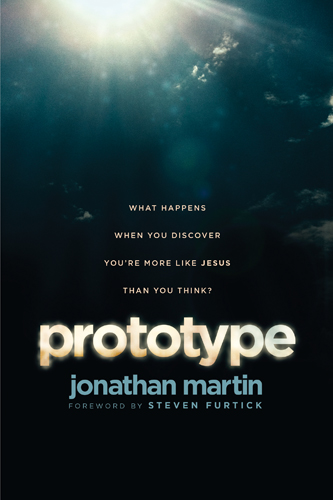
I have to admit, that I struggled with Prototype. I'll go ahead and tell you now that I when I finished the book, I enjoyed it. It's a good book and I would recommend reading it. The reason why I'm wrestling with this review is I didn't enjoy it at first. It took me a little bit to get into the book and really understand the direction that Jonathan Martin was going.

The subtitle of Prototype is, "What happens when you discover you're more like Jesus than you think?" Entering into Prototype, I was expecting to see something more theological. This comes out of my experience last fall teaching about Jesus in a Basic Christian Beliefs class. I was expecting "theological speak." I taught my class about how Jesus is the prototype for the new human, so I thought that I would see sections of scripture from the New Testament spelled out through thorough exegesis explaining how Jesus set the example for the new humanity. Martin does use scripture and he does show how Christ, he just didn't do that in the way I expected and I say this because I know I won't be alone in that expectation. Instead, he does something better. He shows it through real life stories of how he has seen his life and other lives changed. He makes this clear in his last chapter titled "witness" and I think that is an appropriate way to describe this book. It is a statement of what he has seen and now he is witnessing to the call of God to be his beloved like Christ is. It is possible to live a new life and live like God's beloved child.

All that being said, Martin does a great job of explaining how Jesus shows us a new way to be human. He does this by starting off with the fact that God call us, like he calls Jesus, his beloved. God want to love us like his children in the same way he does Christ. Our lives are different now because of the resurrection. Christ came to change the world and make it possible for us to live new lives. The message of the book reminds me of the refrain that Rob Bell keeps returning to at the end of his video The gods aren't angry which is, "You don't have to live like this anymore." Martin is calling all of us broken down sinners to a life where we are called the beloved of God and can live in the light of the resurrection.

This isn't a technical book. That's what I expected, but I'm glad it's not what I got. It's testimony to the life changing power of the life and resurrection of Jesus Christ. If you want to see if change is possible, if you want to hear stories of life change, or if you don't believe that you are loved by God, then you should read this book. It's not the greatest book ever written, but it does tell stories of real people who have been changed by the love of God and there's nothing quite as amazing as that.

Disclosure of Material Connection: I received this book free from Tyndale House Publishers as part of their book review bloggers program. I was not required to write a positive review. The opinions I have expressed are my own. I am disclosing this in accordance with the Federal Trade Commission’s 16 CFR, Part 255 : “Guides Concerning the Use of Endorsements and Testimonials in Advertising.”
May 7, 2013

What does it mean to be a Member of the Church?

In his new book, I am a Church Member, Thom Rainer tackles the tough question of what it means to be a church member. He does this is in a surprisingly short book by building the book around 6 pledges that we should make as church members. Each chapter explains one of the pledges and ends with a formal pledge with a line to sign and date. The pledge is followed by questions for study.

The pledges are:

1. I will be a functioning church member.
2. I will be a unifying church member.
3. I will not let my church be about my preferences and desires.
4. I will pray for my church leaders.
5. I will lead my family to be healthy church members.
6. I will treasure church membership as a gift.

I believe for many there will be problems getting past the title of the book. Some view church membership as an outdated idea or have seen how it has been poorly practiced and they have rejected the idea of church membership. If you can get past the title, however, you will find that Rainer has done a fantastic job of trying to rescue the idea of church membership and show the Biblical basis and practices of church membership. The first three pledges really drive home the point of Rainer's book and reveal what many people have let church membership become.

The problem with membership is that many have let it become something more like a country club membership. In this view, membership asks what we can get out of it instead of how do we function as a member. Rainer describes it this way, "For them membership is about receiving instead of giving, being served instead of serving, rights instead of responsibilities, and entitlements instead of sacrifices. This wrongful view of membership sees the tithes and offerings as membership dues that entitle members to never-ending list of privileges and expectations, instead of an unconditional cheerful gift to God." Instead, he proposes that membership is about being a member of the body of Christ. A member that functions according to his or her place in the body and does so willingly. Much like we expect the parts of our human body to function, Christ expects the members of his church to function.

With this in mind, the pledges are fairly straightforward. Church members will actively participate in the body of Christ. They will work to create unity in the body. They will not put their preferences and desires above other. They pray for their leaders. They love their friends and family and help them to love the church too. Finally, they treasure their membership in the body of Christ and are grateful for the gift God has given them.

Reading this book, I wasn't sure what to expect because of the topic. I have read Rainer before, and loved his work. This one turned out to be no exception. He writes simply and succinctly about what a Biblical church member looks like. I found first few pledges convicting. As a younger person, I want to point the finger at the older generations saying that they have warped church membership. My generation, however, has been found to be highly narcissistic, so I know we're to blame as well. I found the last few to be uplifting and encouraging. I especially appreciated that Rainer argues that families should be worshipping together on a regular basis (something near and dear to my wife, it was the topic of her Master's project).

I would certainly recommend that you read this book if you are a member of a church. It's less than 100 pages and is built for studying with a group. If you're opposed to church membership, you should read this book and interact with what Rainer has to say. When you get down to it, it's hard to argue against someone who encourages Christians to be active in their church, united with each other, humble about their preferences, praying for their leaders, caring for their family, and thankful to God for the opportunity to serve in His church.

Read an excerpt here.

Disclosure of Material Connection: I received this book free from B&H Publishing Group through netgalley.com. I was not required to write a positive review. The opinions I have expressed are my own. I am disclosing this in accordance with the Federal Trade Commission’s 16 CFR, Part 255 : “Guides Concerning the Use of Endorsements and Testimonials in Advertising.”

May 2, 2013

The Secret of Seven Great Men

What does real manhood look like? Who are the role models for men today? These are the questions that lay the foundation for Eric Metaxas' book 7 Men. Metaxas argues that the answer for what real manhood looks like these days goes to one of two extremes. In one extreme men are overly "macho." Men like this use their strength to dominate others and control the weak. Metaxas writes that this is a man, "who might be a man on the outside, but who on the inside is simple an insecure and selfish boy."  The other extreme, he argues, is the total lack of manhood, one where "there is no real difference between men an women." Instead, he believes that the Bible give us a difference picture of what manhood should be. Men should be servant leaders. Just as Christ came not to be served but to serve, men are called to live their lives in service to God and to others. Even many times men are stronger, their strength give protection and serves those around them instead of dominating and lording over others.

For this reason, Metaxas selected 7 men he believes to be good examples of Godly manhood. These men were given power or fame and denied it. They lived in pivotal moments in history and used their lives to serve other instead of their own need. He writes about George Washington, William Wilberforce, Eric Liddell, Dietrich Bonhoeffer, Jackie Robinson, Pope John Paul II, and Charles Colson (two of whom he has already written about: Bonhoeffer and Wilberforce). For each man, he gives a brief biography focusing on the choices that they made that exemplified real manhood and not some other version. Each of these mini-biographies are very well written and he opens each one with a personal reflection and reason why he chose this man. Honestly, there are many men that he could have chosen from, but he picked this men mainly because of the formative influences on his life.

As a fan of artofmanliness.com, I thoroughly enjoyed this book. I know that for some the subject of "manhood" and "masculinity" may be over done or old news, but I do believe that this book is very beneficial. Whatever you believe about the roles of men and women, it's hard to argue with Metaxas on the point that there are few good role models out in our society, either for men or women. This book provides just that, good Christian role models. Honestly, other than the fact that this book is all about men, beyond the introduction he doesn't emphasize the idea of manliness and mostly lets the biographies speak for themselves.

7 Men is a great book that paints a brief and moving picture of 7 great men who did their best to life godly lives and make good impact on the world around them. I would highly recommend reading this book even if you don't agree with Metaxas' introduction. The lives of these men are great examples in world that desperately needs them. I also think the world needs to hear about the lives of 7 godly women, too.

Disclosure of Material Connection: I received this book free from Thomas Nelson Publishers as part of their BookSneeze.com book review bloggers program. I was not required to write a positive review. The opinions I have expressed are my own. I am disclosing this in accordance with the Federal Trade Commission’s 16 CFR, Part 255 : “Guides Concerning the Use of Endorsements and Testimonials in Advertising.”

Apr 8, 2013

Grace in our Debates


I know I’m at least week late on this, but that’s alright. I don’t want to weigh on any of the debates. I want to talk about the debating. I’ve been thinking a lot about the way debating that has been going on in our nation and I want to comment on how debating happens, especially among fellow believers.

While reading What We Talk About When We Talk About God, I was struck by his chapter on the paradox of talking about God. The paradox of God is essentially the fact that we cannot fully know him or describe him and yet we must. It’s hard to live in this paradox. We want answers to our questions. Bell writes,  “Take faith, for example. For many people in our world, the opposite of faith is doubt. The goal, then, within this understanding, is to eliminate doubt.” Many of us want to eliminate doubt. We want it all spelled out for us so that we know what is right and what is wrong. This desire for right and wrong plays greatly into debates that involve theology and morality and it’s this desire that I’ve been thinking about.

People want answers. People were raised to have specific answers for specific questions. Some people, for various reasons, change their mind and choose to believe something else. Whatever we believe, the point is this: we are all trying to do our best to come up with the right answers. When you put the right answers in the context in religion, then the right answers become a big deal. The right answers, for many people, have eternal consequences. Some people are fearful of having the wrong answers and others are concerned that everyone else has the wrong answer.

For that reason, I think that it is important for us to enter debates with grace. It doesn’t matter what side you’re on, you need to be graceful. When discussing matters of faith or morality, people have taken that side because they genuinely think that it is right and they are arguing that side and often it’s because they believe it potentially has eternal importance. When we argue over what religion is right, hopefully at some level it’s because there is genuine concern for the other persons eternal destination. The same can go with what is or is not sinful. If I genuinely believe that you are doing something to endanger your eternal salvation, the right thing should be correction.

I know that many are just rude about their beliefs, and that’s just wrong. I think that those people need to be graceful as well. The point is, have grace when you debate. I think we need to understand that part of the reason for the debate is a genuine concern over you life and salvation. If someone thinks that you’re wrong and your life is in danger, then be grateful for their concern and try to debate kindly with them.

Most of us are just people trying to do our best. If we didn't genuinely think our beliefs were right, then why would we hold them? Be gracious, listen, and disagree in love.

Here are a couple of things that I would recommend that relate to this topic:
Video response from Penn Jillette after being given a Bible (I know it’s an old video, but he has good things to say).
Blog from Donald Miller about Religious Legalism. It’s not the same as what I’ve written here, but it certainly speaks to the same issue.

Apr 5, 2013

Talking about God with Rob Bell, Part 3


This is the last part of my review, the first part is here and the second is here.

Rob Bell wraps up What We Talk About When We Talk About God with a chapter called “so” (there’s also an epilogue that’s about 2.5 pages long). The final chapter brings all of the points together and puts it in the context of life. We often live our lives in a very mechanical way especially in the western world. We’ve been told that this is all there is and we’re only a collection of atoms that form the human machine. We also tend live our lives in a divided world where there is sacred time and secular time. We go through a routine that sort of all blurs together and miss what is happening in our lives. Again, Rob Bell is trying to remind us that there is no differentiating between the sacred and secular. God is here, present in our lives and acting in our lives. He is trying to help us and pull us along in the right direction. We should not let our life become ordinary and routine. Bell argues that we need open our eyes that life is much deeper than we realize and that God is at work all around us.

This is the first time I’ve written more than one post on a single book. I’ve done this because I think there’s a lot to be said about this book. For the most part, I enjoyed it and would encourage you to read it. I think this book would be very approachable to someone who is new to talking about God or uneasy about religion. Rob Bell is a very good with words and very funny. His writing is approachable. This book would create great discussions. I think for people who are already Christians, this book will stretch you a little bit. I think we need to do more to recognize God in our daily lives and remember that God is for us. Also, I believe that if more Christians approached theology with the humility expressed in the third chapter (both), that there would be less fighting in Christian circles. When we recognize that God is beyond us then maybe we might relax and be more forgiving as we talk and try to understand who God is.

While I appreciate this book, there are also things about the book that make me uneasy. One is the science. I appreciate his love of science and find most of it interesting, but get a little uncomfortable how he spiritualizes some of it and describes how everything is interconnected. While he is certainly isn’t pantheistic, this feels like it’s dipping into some new age beliefs mixing quantum physics and spirituality (it reminded me of this). Second, and probably more importantly, I feels like Bell is drifting to a more open and accepting religion. I think tht there are times when we need to be stretched in our beliefs, when we need to realize that God is ahead of us and maybe we are wrong. At the same time, some of this book has the feel of leading to a more open faith where whatever you believe about God is alright as long as you're good. Bell doesn't say this, but they way he rights and speaks, it could certainly lead that way.

This is a good book. I suggest that you read it with a friend who is unsure about religion and let it open up some dialogues. I just think that we need to be cautious when venturing into some of the territory that Rob Bell explores.