Feb 5, 2013

Exploring the Virtues in Tolkien and Lewis

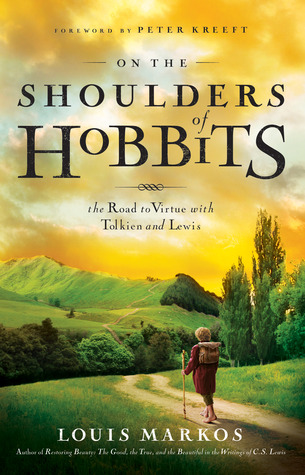
Both J.R.R. Tolkien and C.S. Lewis were godly men and their writing was informed by their faith. Although not always evident to everyone or plain in all of their stories, they crafted their characters and worlds to reveal the virtues of the Christian life. It is more obvious in the work of Lewis, whose fiction works clearly represent Biblical stories and virtues. Tolkien's work is more often praised for the depth of the fantasy world that he created. Unfortunately, many have chosen to obsess over the characters and the world itself and not examine the virtue, or lack thereof, built into his characters. In his book On the Shoulders of Hobbits, Louis Markos examines the virtues behind the stories and characters. He shows how the faith of Tolkien and Lewis undergird the stories of Middle-Earth and Narnia. Markos divides his book into four main sections with four chapters each. The four main sections are the Road, the Classical Virtues, the Theological Virtues, and Evil. In each chapter, he primarily discusses how The Lord of the Rings, The Hobbit, and The Chronicles of Narnia portray the particular virtue or, in the case of evil, the lack of virtue.
Markos begins with the Road. While itself is not a virtue, this is an appropriate place to start when discussing the virtues in the world of story. All good stories begin with a hero being swept up into some sort of journey. This is especially true of Tolkien's works (he even wrote a poem about the Road). The Hobbit and The Lord of the Rings begin with a hobbit (or hobbits) leaving their shire on a journey. Markos rightly explains that all of us are called to take to the road and live out some sort of journey. Although our journey may not be as life threatening as those the Lewis and Tolkien write about, we all have to answer the call to live out the journey set before us.

The heart and meat of this book is found in parts two, three, and four. In sections two and three, Markos expounds how the seven virtues, four cardinal and three theological, are found in the work of Tolkien and Lewis. In the cardinal virtues, Markos does a fantastic job of revealing the characteristics of various characters in Middle-Earth and Narnia and the virtues that they portray. I particularly enjoy his exploration of wisdom and how wisdom and knowledge are not one in the same. Markos shows the differences between the wisdom and discernment of Gandalf and Saruman's quest for knowledge and power. He explains that Saruman's quest for power gives him great knowledge of evil and he gains great power, but Saruman's quest is ultimately folly because he quest for power blinds him to the fact that he is merely a pawn of Sauron. Gandalf, however, understands the wisdom of destroying the ring and not trying to better understand it and wield its power. 

The next part focuses on the three theological virtues of faith, hope, and love. Markos adds to this list friendship. This is, on one hand understandable, because of key role that friendship plays in Lord of the Rings and in many of the Narnia tales. On the other hand, it seems a bit odd that Markos seeks to add to the theological virtues. Looking at the table of contents, it appears that he was merely seeking for symmetry in his four sections to have four chapters. That being said, it is a well written chapter on the importance of friendship both in the lives of the authors and their works. Following friendship, he discusses faith, hope, and love. Compared to the section on the cardinal virtues, this is the weaker of the two discussions of the virtues. Primarily, I was disappointed with his section on faith. Instead of discussion the deep trust in faith that requires, primarily focuses on the meaning of the Greek word Kairos and how the council of Eldrond was a "Kairos" moment that called the characters to faith. 

Finally, Markos finishes with a discussion of evil, which might seem a little out of place, but fits in perfectly to round off this discussion. Not surprisingly, Lewis and Tolkien show a similar understanding of the nature of evil in the world. Neither of them consider evil or any evil power capable of creating anything. They are merely twisting and warping that which is good into evil. Markos explains that the "opposites" of the virtues, are not really opposites. Evil only has the power to steal, kill, and destroy what is good, it has no creative power. This is important in the real world because we need to see that God is the source of life and is more powerful that evil. It takes what God has created and twists, warps, and destroys. What may seem powerful to us, ultimately has no power over the Creator. The vices are not the opposite of the virtues, but merely a twisting of them.

Normally, I don't write reviews this long, but I am very pleased with this book and enjoy talking about this subject. Even though I have offered a few critiques, I believe that this is a fantastic book and a must read for anyone wanting to delve deeper into the writings of Tolkien and Lewis. I wish that Markos would have ventured more into The Silmarillion and into some of Lewis's other fiction works (primarily the Space Trilogy), but that would likely make this a much larger book. As it is now, it is very approachable for anyone who appreciates Lewis and Tolkien. For someone like me who wants more, Markos includes a list of books about Tolkien and books about Lewis for further study. If you like C.S. Lewis and J.R.R. Tolkien, which most people do, read this book. It will help you appreciate their books and understand them as not just fantasy books, but as works of devout Christian men expressing their faith.

Disclosure of Material Connection: I received this book free from Moody Publishers as part of their book review bloggers program. I was not required to write a positive review. The opinions I have expressed are my own. I am disclosing this in accordance with the Federal Trade Commission’s 16 CFR, Part 255 : “Guides Concerning the Use of Endorsements and Testimonials in Advertising.”

Jan 9, 2013

Who do you think you are?

How do you define your identity? Many people struggle with this. They try to define their identity in many ways and with many things. In his newest book Who Do You Think You Are?, Mark Driscoll answers this question with two words, "In Christ." As a Christian, when we ask ourselves who we are, we ought to start with the fact that we are in Christ. We should not let anyone or anything other than Christ define us. Driscoll writes that, "The absolute best place to begin constructing an identity is in Jesus Christ."

Driscoll writes Who Do You Think You Are? because he has seen many Christians struggle with their identity. They have let other people, past events, and culture define their identity instead of letting Jesus be the one who shows them who they really are. He begins the book by saying that most people are in an identity crisis. People don't know how find their identity. Many have lett items, duties, others, longings, or sufferings (i-d-o-l-s) tell them who they are. Driscoll argues that instead, we are children of God made in his image and should let that define our identity. He starts of with that it means to be "in Christ." When we accept Jesus as their savior, we are no longer in Adam, instead they are now in Christ. We have received a new life and a new identity. Instead of making our own identity and living in our sin, Jesus defines our identity and we live our lives in him. Christ paid the price for our sin and made a way for us to be new. From here, Driscoll uses Ephesians as a basis as a way of understanding what it means to be in Christ. He writes that Christians are saints, blessed, appreciated, saved, reconciled, afflicted, heard, gifted, new, forgiven, adopted, loved, rewarded, and victorious.

I know that there are a lot of people who aren't fans of Driscoll, but I think that even many of his critics (not all, I'm sure that someone could find something wrong with this book) would be hard pressed to disagree with the premise of this book or the way in which he goes about it. One of the things that I have always appreciated about Mark Driscoll is his love of scripture. I don't always agree with his interpretations of it, but he is a man who studies and does his best to be faithful to the text. This faithfulness to the Bible shines through in Who Do You Think You Are? Starting in chapter 3, he opens each chapter with a passage of Ephesians then uses that text to explain who we are in Christ. In addition to the faithfulness to scripture, I believe the topic of this book is not one that would easily lend itself to controversy. Driscoll covers a topic that every Christian has to understand. We all have to understand how our identity is shaped by a relationship with Christ. The only place that he might cause trouble for some is when he gets to Ephesians 5:22 and addresses the issue of wives submitting to their husbands. Even there, though, Driscoll is not writing primarily about husbands and wives, he is writing about how Christ loves the church.

Even if you don't like Driscoll, I would suggest this book. If you are in Christ, you can benefit from this book. He covers a wide range of ways the people struggle to create their identity and odds are you have struggled with one of these ways. I believe that many people will be encouraged by this book and I believe that is why Driscoll wrote the book in the first place. It's well written, it's very scriptural, and it's obvious that he did a lot of study to prepare for this book. I would recommend this book for most any one and it would be great for a group to work through together. If you have some time Who Do You Think You Are? would be a great way to start your year.

Disclosure of Material Connection: I received this book free from Thomas Nelson Publishers as part of their BookSneeze.com book review bloggers program. I was not required to write a positive review. The opinions I have expressed are my own. I am disclosing this in accordance with the Federal Trade Commission’s 16 CFR, Part 255 : “Guides Concerning the Use of Endorsements and Testimonials in Advertising.”

Dec 22, 2012

Finding God in the Hobbit

Most people know that J.R.R. Tolkien was Christian. When reading his books, however, it might be very easy to miss that fact. Unlike the works of his friend C.S. Lewis, Tolkien's most popular works do not seem to connect so easily to the Bible. When carefully examined, though, Tolkien's faith shines through in his work. That is why Jim Ware has written his book Finding God in the Hobbit. The Hobbit and The Lord of the Rings are not an allegory for the Christian life and there isn't Christ-like figure that can be clearly identified. So where is God to be found in Middle-Earth?

In Finding God in the Hobbit, Ware looks a the story of Bilbo and the Dwarves to find helpful insights into the Christian life. He explores what we can learn about our faith by examining Bilbo's journey, the eagles, Gandalf, and even rope. In each chapter, Ware reflects on the text of The Hobbit and how that part of the story can help us better understand our walk with God.

To be honest, this book wasn't exactly what I expected it to be. With a title like Finding God in the Hobbit, I would imagine it to be an analysis of the story and how that exemplifies the various points of a Christian worldview. For example, Ware does do this a little bit in his discussion of how we can accept a story featuring a wizard since, seemingly, this is banned in the Bible. However, this book is more reflective and devotional. The chapters are short and designed around using elements of the story to reflect on scripture and the nature of Christian life.

Even though this was different that what I expected, it was still enjoyable. Ware does a good job of using Tolkien's work as a springboard for a Christian lesson. Because I enjoy Tolkien's books and the extent to which he has developed them, I would have liked a more in depth discussion. There is a lot to be said about the characters of Tolkien's world and the Christian elements that he has built into it. Ware's book is great, but just scratches the surface of these great works. If you are new to Tolkien, this book is a great place to start. If you have been a lifelong fan of Tolkien and his works, then Finding God in the Hobbit might not satisfy your desire to dive into the Christian themes to be found in Middle Earth.

Disclosure of Material Connection: I received this book free from Tyndale House Publishers as part of their book review bloggers program. I was not required to write a positive review. The opinions I have expressed are my own. I am disclosing this in accordance with the Federal Trade Commission’s 16 CFR, Part 255 : “Guides Concerning the Use of Endorsements and Testimonials in Advertising.”

Dec 12, 2012

Who is Jesus Christ?

Jesus Christ is a somewhat controversial figure. Everyone has or is looking for an answer to the question, "Who is (or was) Jesus Christ?" There is very little denying that Jesus was a real person who really walked the earth in the first century AD, but one you get past that there are many divergent answers. The most popular scholarly thing to do in 21st century American culture is to join the quest for the "Historical Jesus." This view examines Jesus through a historical lens and sometimes discounts scripture as a valid source for understanding Jesus. Apart from discounting scripture, I think that it is valid and helpful to see Jesus through the lens of first century Jewish (and Roman) culture. Where this can fall short, however, is looking at the bigger picture of who Jesus is beyond his life on earth. This is why Leonard Sweet and Frank Viola have written Jesus: A Theography. It is their belief, that while these historical pictures of Jesus are helpful, they are lacking the life of Christ before and after incarnation. The ultimate goal of their book Jesus is to give a picture of Christ in light of the entirety of scripture and not just within the Gospels.

Sweet and Viola begin before the beginning. As a member of the trinity, the Son is eternal existing before the creation of the word. Because of this, Jesus tries to paint a picture of the eternal relationship of the trinity that existed before the creation of the world. From there, they move to the creation of the world itself. This is likely where some will begin to disagree with the interpretation of Creation. Sweet and Viola look for Christ in the days of creation and interpret them somewhat allegorically. They describe how the days of creation illustrate the earthly life of Christ told in the gospels. For those who interpret the Bible literally, this description of Creation might be a bit of a stretch. Once you get beyond this section, however, the book turns to the usual topics of discussion. From the Creation account, Sweet and Viola turn to the earthly life and ministry of Christ. This section of the book is an in depth look at who Jesus is and what he did on earth. The last few chapters book tell the life of Christ after the resurrection and discuss the inevitable return of Christ.

Overall, I highly recommend this book. It's not a short read, but it is time well spent. Even in the sections where some might disagree with their interpretation, Sweet and Viola do a fantastic job of digging into the life of Jesus Christ. This is a book that almost anyone can read. They do a great job of showing their research and giving good explanatory notes. While it may not be deemed as scholarly as some works, they have certainly shown their work and anyone studying Jesus would benefit from reading this book. If you are looking for a great biography to read, I suggest Jesus: A Theography. It would an appropriate read for the Christmas season or to start the new year.

Disclosure of Material Connection: I received this book free from Thomas Nelson Publishers as part of their BookSneeze.com book review bloggers program. I was not required to write a positive review. The opinions I have expressed are my own. I am disclosing this in accordance with the Federal Trade Commission’s 16 CFR, Part 255 : “Guides Concerning the Use of Endorsements and Testimonials in Advertising.”

Oct 16, 2012

What does it take to be Greater?

Many of us want to achieve greatness, but according to Steven Furtick this is a vague and unrealistic goal of being better that doesn't really work. There are so many ways that the world and even the church define greatness that it's impossible to know what it will really take to become great. On the other hand, there are plenty of us who are just trying to get by. We live in the world of good enough and live a life of mediocrity. Furtick suggest that instead being good enough or shoot for the vague idea of greatness, that we need to aim at being greater.

Furtick takes his title from John 14:12 where Jesus tells his disciples, "Whoever believes in me will do the works I have been doing, and they will do even greater things than these." He is encouraging his readers to be greater. God has called us to the greater life and has promised that we will do greater things. Using Elisha as an example, Furtick shows how partnering with God will lead to a life do doing greater things for God's kingdom. He doesn't lay out a formula or give some special secret that will lead to greatness, the secret is God working through his people. When we let God shape our life, our dreams, our goals, and our purpose then he will use us to do those greater things.

Greater is a fairly easy read and isn't very long. On the surface it seems like just another self-help book that will make you a better person, but Furtick doesn't do that. He emphasizes God's place in our lives and how following him will lead to a greater life. This is the strength of this book, it's about God. Even though he is writing about your life, the focus is on God. The weakness of this book is that in some aspects it's fairly vague, but I think that's because he isn't giving a formula. Instead, he is presenting a lifestyle that has to be lived out. The specifics of the greater life are filled in by the reader. If you want to read this book, I would suggest reading it with another person or with a group. This is a book that is geared toward action. I think the real value of this book would be in the conversation and dreaming that it inspires. The message is fairly simple, but living out the greater life will take some work and is best done in community.

Disclosure of Material Connection: I received this book for free from WaterBrook Multnomah Publishing Group for this review. I was not required to write a positive review. The opinions I have expressed are my own. I am disclosing this in accordance with the Federal Trade Commission’s 16 CFR, Part 255 : “Guides Concerning the Use of Endorsements and Testimonials in Advertising.”

If you appreciate my review, please rate it:

Jul 17, 2012

Review of the Voice Bible

Last year I had the opportunity to review The Voice New Testament. I very much enjoyed, so I was thrilled to have the chance to review the whole Bible. Needless to say, I love to have the whole Bible in this new version.

Here's a quick review of what I liked about it previously: The Voice is a collaboration of many scholars, artists, and pastors. It is not just the work of one person, and it is not just the work of scholars. I think that it is fantastic that artists have been included in the translation process since so much of the Bible, especially the old testament, is poetry. Again, while reading The Voice, it didn't feel like the typical paraphrase. It still reads like a Biblical translation. It feels like it is using language that would be familiar to someone who has read the Bible and yet easier to understand for those who do not have much experience with the Bible.

As far as the translation is concerned. think The Voice offers one of the best paraphrase/dynamic equivalents thus far. The majority of the translation is done like any other version of the Bible with any additions are in italics so that it is easy to see when these additions have been made. And the additions don't really add a new content to the text, instead they add explanation.

Something that I didn't note last time are the notes in the Bible. At the beginning of each book, there is about a page of introduction. Also, there are added notes interspersed within the text itself. These notes  are highly beneficial for understanding how to read each book and the background of the text.

I still think that this is a fantastic addition to anyone's Bible reading. I'm still hoping that it will be available for Logos so that I can have it in that form. If you are eager to read it, you can look up various passages on their website www.hearthevoice.com. I highly encourage you to check out this translation and considering purchasing it at some point.

Disclosure of Material Connection: I received this book free from Thomas Nelson Publishers as part of their BookSneeze.com book review bloggers program. I was not required to write a positive review. The opinions I have expressed are my own. I am disclosing this in accordance with the Federal Trade Commission’s 16 CFR, Part 255 : “Guides Concerning the Use of Endorsements and Testimonials in Advertising.”

Jun 26, 2012

From the Library of C.S. Lewis

While in school, I loved it whenever a teacher would share about the books and authors that shaped their thinking and teaching. It helps me to understand why they think they way they do. Many, including myself, consider C.S. Lewis to be a teacher. Although he never directly taught me, his works have helped to shape me and the way that I think. From the Library of C.S. Lewis allows those of us who have been mentored by the writings of Lewis to pull back the curtain and read from the authors that mentored him. James Stuart Bell has compiled selections from some of the works that Lewis read and learned from. The selections include works from G.K. Chesterton, George MacDonald, George Herbert, Thomas Aquinas, Andrew Murray, Augustine, Brother Lawrence, Beowulf, Aristotle, C.G. Jung, Owen Barfield, and Julian of Norwich. This is a collection of great works and authors all of which were found in Lewis's library and influenced him.

This book is a wonderful resource to anyone who has been influenced by Lewis or to someone who is studying the work of Lewis. The readings have been organized by topic which would make it easy study specific topics alongside the works of Lewis. I think that Bell has done a great service to anyone wanting to study Lewis and his works. The only downside to this book is that it is only selections from the writers who influenced Lewis. It is hard to just sit down and read through, it is merely readings organized by topic. As I read through sections of it, I found myself wanting some commentary on how these works influenced his thinking or references to his work to show how these readings connected to his work. The book, however, is what it says it is. Bell does not explain anything, he is merely presenting. While I wish I had some more explanation, the book itself is impressive and would have taken a lot of work just to put together.


I would recommend this book to anyone studying Lewis or someone has read a great deal of Lewis. This would be a good companion to any serious reader of Lewis. I could also seeing this book being useful from a devotional standpoint. The readings are short and organized by topic. My only warning is for those who might be looking for an explanation of how these works shaped Lewis. This book is all readings and no commentary. 


Disclosure of Material Connection: I received this book for free from WaterBrook Multnomah Publishing Group for this review. I was not required to write a positive review. The opinions I have expressed are my own. I am disclosing this in accordance with the Federal Trade Commission’s 16 CFR, Part 255 : “Guides Concerning the Use of Endorsements and Testimonials in Advertising.”