Apr 16, 2012

How to be Secretly Incredible

Most people want to live incredible lives. We want to make an impact and change the world. Bob Goff is one of those people. He wants to make an impact on the world, and, in fact, he is making an impact in the world. In his book Love Does, he wants to show the reader how to be incredible. Even though the subtitle of the book is "Discover a Secretly Incredible Life in an Ordinary World," this book does not offer the reader five easy steps or some other formula for success. Instead, Bob shares stories from his life. Some of the stories are humorous, some exciting, and others very moving. Each story relates to one main theme: Love Does. Bob writes this story to motivate his readers to take action. He wants you to go out and do something. So much so that he even includes his phone number at the end so that you can call him and talk about the ideas in the book. Love doesn't just plan things out, love is acted out. He writes, "Secretly incredible people just do things." Bob doesn't plan much. He knows what he wants to do and does it, and he doesn't let any worry or doubt stand in his way.

I thoroughly enjoyed reading this book. Bob writes in a very personal way like he wants you to be his friend. In fact, it becomes apparent that he knows no strangers, so much so, I've chosen not to refer to him as "Goff" even though that is proper for authors you don't know. It was certainly a very moving book and different than the typical inspirational Christian books I have read. He doesn't lay out a plan or steps. He just tells stories. He wants us to live. Bob believes that God wants Christians to do something. I suggest that you go and read this book. It's not a complicated read or even a deep read, but it's a good read. It straightforward and has a simple message: Do something. Through stories of his own life, Bob shows us that living an incredible life starts with doing something. In addition, simply by buying the book you will be on your way to doing something since all the proceeds go to Restore International's Leadership Academy in Gulu, Uganda and the Mentoring Project. Go buy the book, read it, and then do something.


Disclosure of Material Connection: I received this book free from Thomas Nelson Publishers as part of their BookSneeze.com book review bloggers program. I was not required to write a positive review. The opinions I have expressed are my own. I am disclosing this in accordance with the Federal Trade Commission’s 16 CFR, Part 255 : “Guides Concerning the Use of Endorsements and Testimonials in Advertising.”

Apr 3, 2012

Spiritual Rhythms in Community

Originally published on Englewood Review of Books.

A Review of: Spiritual Rhythms in Community: Being Together in the Presence of God 
Keith Meyer

As a drummer, I understand the importance of a good steady rhythm in music. It isn’t very hard to see how the metaphor can carry over into life. Just as a steady rhythm holds together songs, so a steady rhythm in life can keep us on the right track. Keith Meyer uses dancing to describe life rhythms. In the book’s introduction, he describes spiritual disciplines as similar to dancing, both are a “series of engaging and disengaging rhythms” (13). First we disengage from normal life activities in order to be with God for rest and renewal, and then we engage with life in order to live so that we can love God and others. Meyer suggests that, “we learn to take spiritual disciplines as our means or steps in a Trinitarian two-step dance of disengagement and engagement in order to live as God meant us to live” (14).

Within this two-step dance, there is a three-part rhythm. Meyer, using Jesus as an example, shows how this dance of engagement and disengagement forms a rhythm of formation, community, and mission. Jesus would spend time in prayer, then be in community with his disciples, and then was on mission teaching the crowds. Our practice of the disciplines should also lead to formative time with God, community time with Christians, and time spent living out the mission of God. This rhythm is cultivated by the two-step dance of engagement and disengagement, and Meyer uses these dance steps to structure the rest of the book.

The first part of the book focuses on disengaging. Meyer defines disengaging as disconnecting “from all that keeps us from a life with God and others in order to hear God’s call to become apprentices” (21). The main goal of disengaging, as Meyer describes in chapter 1, is to be alone in order to be with the Father. Jesus, the primary example in each chapter, even though he is one with the Father, was intentional about spending time alone in order to be with his Father. We, too, need to be intentional about disconnecting from the world so that there is nothing to prevent us from being with our heavenly father. The rest of the book’s first part is dedicated to ways of disengaging from the world in order to be with God. Meyer encourages readers to create retreat centers in their hearts, find deserts and other sacred spaces to meet with God, and to go off-line. All of these are ways of getting away and getting with God. Meyer is we have to have a space, in our hearts, in our lives, or somewhere in this world, where it is just God and us. The world does a good job of keeping us busy and distracted and often times we need a getaway in order to have rest and quiet. When we find those places, Meyer challenges us to do nothing besides be in God’s presence and to be silent before God. It may seem weird to some, and difficult to most, but doing nothing and remaining silent are ways for us open ourselves to what God wants us to see, hear, and do. After we encounter God, we must reenter the world and engage it with God.

The second half of the book focuses on engaging. Meyer broadens the focus of his writing to now look at all of life and how to engage the world as a Christian. He opens the second part by discussing friendship. Part of reengaging with the world is building Godly friendships that allow us to encourage one another and sharpen each other. Meyer believes that friendship is important to spiritual formation, but “we don’t often see friendship…as a discipline to cultivate” (112). Meyer also encourages readers to see the rhythms of daily life as “opportunities to fill our lives with God’s presence” (130). The times when we eat, clean, wake, or go to sleep are all times when we can acknowledge God’s presence and build him into our daily lives. In this second part, Meyer also discusses the importance of forgiveness and service. We need to repair broken relationships by asking for forgiveness. Meyer also stresses the importance of engaging the poor, and not just to serve them but to spend time with them and get to know them. Meyer’s final two chapters are good reminders about the Christian life. First, God works through our weaknesses. Meyer reminds us that God uses us, “as cracked clay jars that show off the glory of Christ through flaws and weaknesses” (164). Then, he wraps up the book by encouraging readers to look to those who have gone before. We are not the first to follow God and we should look to those who have gone before as guides for the journey that lies before us.

Keith Meyer has done an incredible job in describing to sides of spiritual formation that rarely get put together. Often people write about the importance of either disengaging from the world or engaging the world. Meyer, however, has done both. He also has done it in a way that challenges Christians to get out and do something about what they read. Meyer has written this book as a group devotional. Each chapter is preceded with a Psalm reflection and is followed by an application for a group to go and do. He has done this so that the book would help to create a rhythm of formation, community, and mission.  Spiritual Rhythms in Community is a challenging read and help to cultivate growth. This book is not intended to be read alone. Although it could be read that way, it will lose much of its value.

The only real weakness of the book is the second half. The first half of the book is easily connected and united around disengaging from the world and connecting with God. This theme is easily understood. The second half, however, since it is discussing engaging the world has more ground to cover. Because of this, each chapter seems at times to stand by itself instead of with the rest of the chapters in the second part. This is understandable, though, each chapter is meant to be read and then followed by the activity at the end of the chapter. Some may find the second half somewhat disconnected, but I believe that Meyer is doing his best to reach into many areas of life.

I would recommend Spiritual Rhythms in Community for any small group trying to stretch themselves. Meyer’s book is encouraging and challenging. The chapters are short and easily engaged.  If you really do commit to follow through on each application, I think that this book will be a great aid in your group’s spiritual and relational health.


Mar 23, 2012

The Power of Introverts


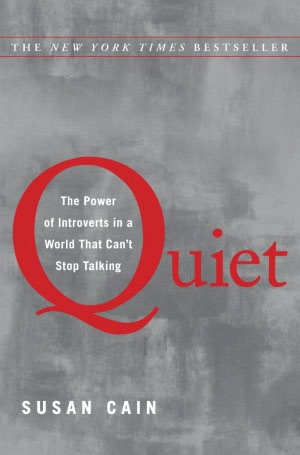
Our culture does not appreciate quiet. We tend to equate social power with social prowess. The outspoken people seen are as the leaders in our culture. Susan Cain, however, seeks to dispel this notion that people with a quiet nature cannot be major influencers or leaders. She opens her book Quiet by discussing one of the most influential figures in the civil rights movement. Rosa Parks made an impact in the civil rights movement through her quietness. She chose to take a quiet stand instead of being outspoken. In doing so, she became a symbol of strength in the movement. This is the first of many examples of introverts that Cain offers to show the power of quiet in a world that likes to talk.

Quiet is Cain’s attempt to prove that, despite America’s preference to extroversion, introverts can be extremely successful and influential in our culture. She begins by discussing the “Extroverted Ideal.” Since the time that Andrew Carnegie taught us how to win friends and influence people, the ideal personality has be extroverted. In the world of business and leadership, the way to get ahead is to speak up and stand out. Cain visits Harvard Business School to understand how they teach students to succeed in business. It becomes very clear that Harvard teaches their students to speak up or they won’t succeed. The issue that Cain finds, however, is that in all their talking, people aren’t listening. In this first part of the book, Cain poses the question of whether or not the extroverted ideal is really ideal. What she finds is people being trained to talk the most, whether they are educated or not, in order to get ahead (see my post on The Introvert in the Boardroom). Businesses promote group brainstorming which tends to favor the outspoken. Cain instead shows that often people who quietly, by themselves, and are allowed to think through the problems are more productive and effective that people working together in groups where people are fighting for attention. While the outspoken standout, they are not always bringing success and are often times talking over those who can give good ideas.

The next part of here book looks at the biology and psychology behind introversion. Cain seeks to discover if introversion genetic. This section is much different that the first part of the book, but still interesting. I found this section of the book personally interesting because I read through it going, “Oh, That’s why I am like that.” Introversion and extroversion seems to be built into our brain functions even from birth. It effects the way we think and process information.

The third part of Cain’s book compares our culture with Asian cultures to see if the Extroverted ideal is apparent in all cultures. Cain shows that there are major differences between the two cultures. America sees extroversion as ideal, while Asian cultures see introversion as ideal. One of the primary differences is how success is achieved. Introverted cultures tend to succeed through persistence and perseverance, while extroverted cultures succeed but speaking over others and getting your ideas heard. Cain uses this to show the some of the people we see as successful succeeded because of persistence instead of outspokenness.

Last, Cain discusses living as an introvert and with introverts. She applies what she’s discussed in previous sections to having relationships, working in an extroverted culture, and raising introverted children. This section is a good balance to the rest of the book which is trying to show that extroversion is not the ideal. Cain reminds her readers that sometimes introverts do need to speak up, but should also not lose the good qualities that introversion brings. She also offers very good practical information on how to live in introvert-extrovert relationships and how to raise introvert children.

Quiet: The Power of Introverts in a World that Can’t Stop Talking is a great book. Susan Cain does a good job of presenting how our culture favors extroversion and looks down on introverts. It may seem at first that Cain is trying to say that introverts are better than extroverts, but reading through the whole work she does a wonderful job of challenging introverts to grow in certain areas. She also challenges extroverts to consider the benefits that introverts are able bring. As an introvert myself I most appreciated the second and fourth sections of the book. I was very interested to learn about myself and why I am the way I am. The second section does a good job of explaining many the biological factors of introversion and extroversion. The fourth section is very helpful because of the helpful advice for living with extroverts and raising and teaching introverted children.

I would recommend this book to just about anyone. If you are an introverted, you will find this book very helpful and encouraging. If you are an extrovert, you can learn why your introverted friends are the way they are and how to best interact with them. I would highly recommend this book to anyone in a business situation, this book can be really helpful in learning how to get the most out of the introverts in your office. I would also recommend it to my friends in the ministry along with Adam S. McHugh’s book Introverts in the Church. I hope that Cain’s book will help people change their understanding of introversion. Introversion is not a weakness. There may be areas where introverts are weak, but there are always areas where introverts tend to be stronger than extroverts.

Disclosure of Material Connection: I received this book for free from WaterBrook Multnomah Publishing Group for this review. I was not required to write a positive review. The opinions I have expressed are my own. I am disclosing this in accordance with the Federal Trade Commission’s 16 CFR, Part 255 : “Guides Concerning the Use of Endorsements and Testimonials in Advertising.”

Mar 17, 2012

St. Patrick's Day


St. Patrick's Day is one of my favorite days of the year. It's not for the same reason that most like St. Patrick's day, instead it's because of St. Patrick and the impact he had on the world. Patrick left his home in England and went to Ireland to preach Jesus to the people that he earlier lived among as a slave. In short, God did great things with Patrick. You can read a lot more about him over at Mark Driscoll's blog. St. Patrick's Day is all about remembering one of God's faithful servants who spent his life preaching the good news of Jesus Christ.


I would also recommend the book Saint Patrick by Jonathan Rogers. It's a short and easy read. It really hits a the heart of what Patrick's life is all about. It's definitely one that you could read most if not all of in a day or a weekend. 


Take some times today and thank God for the missionaries who spend their lives spreading the good news and love of Jesus Christ around the world. That's a much better way to honor Patrick instead of dressing in green, faking an Irish accent, and talking about leprechauns. I would, however, recommend some corned beef and cabbage, that's some good food.


Happy Saint Patrick's Day! I'll leave you with some of the words of Patrick.


"For there is no other God, nor ever was before, nor shall be hereafter, but God the Father, unbegotten and without beginning, in whom all things began, whose are all things, as we have been taught; and his son Jesus Christ, who manifestly always existed with the Father, before the beginning of time in the spirit with the Father, indescribably begotten before all things, and all things visible and invisible were made by him. He was made man, conquered death and was received into Heaven, to the Father who gave him all power over every name in Heaven and on Earth and in Hell, so that every tongue should confess that Jesus Christ is Lord and God, in whom we believe. And we look to his imminent coming again, the judge of the living and the dead, who will render to each according to his deeds. And he poured out his Holy Spirit on us in abundance, the gift and pledge of immortality, which makes the believers and the obedient into sons of God and co-heirs of Christ who is revealed, and we worship one God in the Trinity of holy name."
St. Patrick's Confession


"I bind unto myself today
The strong name of the Trinity,
By invocation of the same,
The Three in One and One in Three."


Mar 12, 2012

The Introvert in the Boardroom

I'm not a fan of Donald Trump, but The Celebrity Apprentice does make for fairly entertaining television. If you haven't seen the show, it's fairly straightforward. Two teams of celebrities compete in business challenges and at the end, the losing team is judged by Trump and one person (and sometimes more) gets fired.  While watching last night's episode, I was particularly intrigued by what happened in the boardroom when the team of celebrity men were judged by Trump. They failed in a task to promote a new car from Buick. The most interesting part about this failure is who is on the men's team: Michael Andretti. Andretti is a member of one of the most famous racing families in America. He drove Indy Cars for a living and is now owner of the Andretti racing team. Trump was amazed that the men could lose with Andretti on their team.

Throughout the show, however, one thing about Andretti became clear. Michael Andretti is an introvert. I don't say this out of shame because I'm an introvert. Watching what happened at the end of the show was almost painful. Trump expected Andretti step up and take charge. Trump thought it was a perfect task for him to be at the forefront to sell this car. Andretti, however, saw a challenge that involved selling a car and making a presentation and quickly handed the leadership role to someone who does that. Conflict erupted in the boardroom as Trump questioned Andretti about not taking a task tailor made for him since it was about a car. Poor Andretti tried to defend himself and remind Trump that he's just a driver and used to be behind a helmet. At the end of the episode (spoiler alert), Andretti found himself fired for not wanting to speak up and sell a car. From my perspective, he was eliminated for his desire as an introvert to not the outgoing salesmen that the challenge needed.

I've been reading Susan Cain's new book Quiet: the Power of Introverts in a World that Can't Stop Talking and I couldn't help but notice how the struggle between introvert and extrovert taking place on the Apprentice mirrored exactly what Cain describes in the first section of her book. I do think that Andretti could have lead this challenge, but he also did come on stage during the presentation and was a part of the Q&A time at the end. He was involved and present in the selling of the car, but did not want to be the one doing it. It didn't fit his personality. Introverts can be successful, but frequently in America success is defined by the person who talks the most, in other words extroverts who step and take charge. In the apprentice boardroom, the extroverted Trump makes the rules and only the extrovert can succeed by these rules. We need to recognize that the most vocal person is not always the right person. Sometimes it's the quiet, calculated move from the introvert that can lead to success. Trump only listens to the people who are loud enough to talk over him in the boardroom. Unfortunately he didn't listen to Andretti who was trying to say that he is not a car salesmen or even a car expert, he is a driver who sits by himself in a car for hours on end. In the end, it was hard to see introvert kicked out primarily for being an introvert.

Feb 28, 2012

What does it mean to have Faith like a Child?

We have all heard and been told that we ought to have faith like a Child. This comes form Matthew 18:3 where Jesus tells his disciples that "unless you turn and become like children, you will never enter the kingdom of heaven." Many of us wonder, however, what Jesus meant that we should become like Children. This is the focus of R.C. Sproul Jr.'s new book The Call to Wonder: Loving God like a Child. 

He begins by exploring how surprising it is that Jesus would ask us to become like children, but the more he explores what it means to be like a child, it is not surprising that God asks this of us. Children are innocent, loving, and are ready and willing to trust whatever their parent tells them. Through many personal reflections on being a son and being a father of eight children, Sproul demonstrates what it means to love our heavenly father like a child. Essentially, his book is a call to step back, and see God in the same why that many children will see their father. They love him, marvel at his works, try hard to please him, and simply love to be in his presence. Sproul also reminds us that this is not at the cost of maturity. Even though Jesus asks us to be like children, we are still to mature. We must deal with the deep parts of life, but never lose the childlike love for God.

One of the most surprising insights of this book is how often Sproul discusses honoring his own father in the context of learning to be a child of God. God reveals himself to us as our father. That is the role that he carries, and this book has shown me that I often neglect to honor God as my father. I do desire to honor and please my earthly father, and God asks me to do the same for him. This is one of the most important things that I learned in reading this book.

I enjoyed this book and highly recommend it. It is an easy read which is in the spirit of this book. Sproul describes that sometimes we need to not analyze things so much and just wonder at the greatness of creation. He does just that in his writing as well, he does not over analyze "childlikeness" but instead says simply that this is what children are like and this is why God wants us to be like him. If you get a chance you should read this book.

Disclosure of Material Connection: I received this book free from Tyndale House Publishers as part of their book review bloggers program. I was not required to write a positive review. The opinions I have expressed are my own. I am disclosing this in accordance with the Federal Trade Commission’s 16 CFR, Part 255 : “Guides Concerning the Use of Endorsements and Testimonials in Advertising.”

Feb 11, 2012

Learning to Laugh With C.S. Lewis

If you've read C.S. Lewis, you know that even in some of his more serious works, there is humor. Have you ever stopped to wonder why Lewis writes this way? I think that there are many of us today who ignore the power of laughter, humor, and even joy in the life of a Christian. Lewis knew the power and used it in his writing to convey truth in a very powerful way. In his book Surprised by Laughter: The Comic World of C.S. Lewis, Terry Lindvall explains the power of laughter in the life and work of C.S. Lewis. He explains in four sections: joy, fun, the joke proper, and satire and flippancy. In each section Lindvall breaks down what each idea is and how is shown through the work of Lewis.

Anyone familiar with Lewis will not be surprised the joy is included as one of the sections because he built his autobiography Surprised by Joy around the concept. Joy is probably the most important in the world of Lewis is really finds itself far about all the other topics. It is only joy that one can possess no matter the circumstance. Lindvall explains how Lewis believe joy is always found in our lives even through times of suffering. Fun and joking are also evident in the work of Lewis. Many of his stories portray characters having fun and adventure. Jokes abound in his fiction. He even tells the story of the first joke in Narnia in The Magician's Nephew. Lindvall explains the importance of having fun and enjoying a good laugh with friends. The last section of the book is a little different from the rest. Satire and flippancy are related, but come from opposite attitudes. Satire is offen used by Lewis. He uses humor to expose and comment on serious situations that he believes need to change. Flippancy, however, is something that Lewis opposes. It makes light of serious points without the desire to correct. According to Lewis, a flippant person has no joy but merely laughs at the awful state of the world.


The main message of this book is that Lewis preaches a joyful and fun Christianity. Many take issue with having fun and believe we should all be very serious. Lindvall points out that in Lewis' work serious people think to much of themselves and it is instead the ones who are willing to laugh (especially at themselves) who understand humility in life. True laughter and joking is always done in love and is never more important than love.

Lindvall's book is very well done. It is easy to tell that he is very familiar with Lewis and his work. If you are studying Lewis in depth, this is a fantastic read. I highly recommend it. I must, however, make two comments about this book. First, it is long. At around 450 pages, this is an in depth study. It will take a while to get through this book for most people. Second, this often discussions more than Lewis. While the heart of this book is Lewis and his work, he often discussion the works of G.K. Chesterton and other influences on C.S. Lewis. For the most part, this makes sense, but in some chapters Lindvall writes as much about Chesterton as he does about Lewis. That being said, this is still a very good book. It is a great read for anyone who love C.S. Lewis and cannot get enough of him. It will help you to better understand Lewis and his work.

Disclosure of Material Connection: I received this book free from Thomas Nelson Publishers as part of their BookSneeze.com book review bloggers program. I was not required to write a positive review. The opinions I have expressed are my own. I am disclosing this in accordance with the Federal Trade Commission’s 16 CFR, Part 255 : “Guides Concerning the Use of Endorsements and Testimonials in Advertising.”